


The Tricolour Is Not Just a Flag, But a Symbol of the Nation’s Pride, Freedom, Respect and Patriotism
(By – Imran Sagar, Journalist)
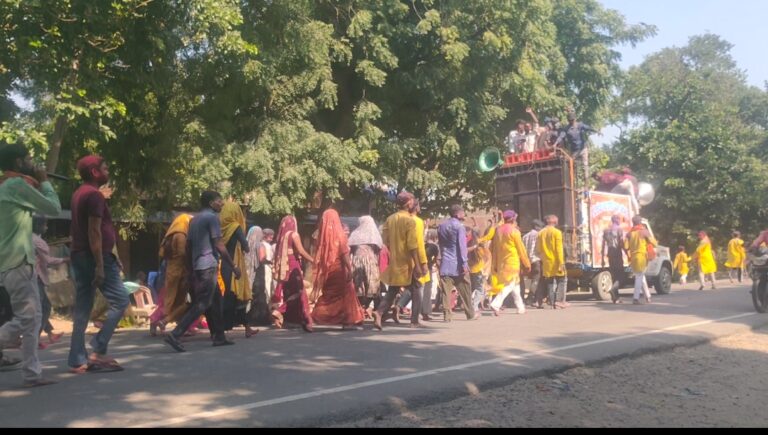
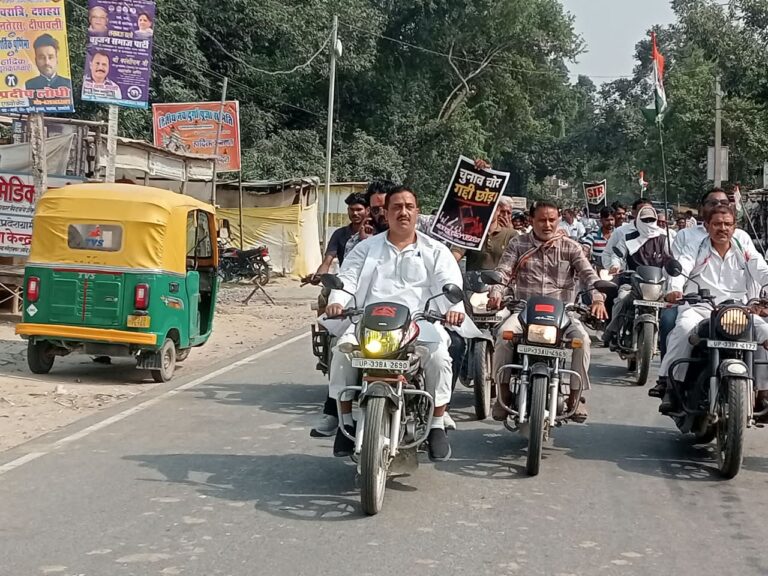
Indis-The Tiranga Yatra is a patriotic cultural and social programme in India, in which every Indian should participate by carrying the national flag—the Tricolour—in their hands and taking part in a procession on foot, motorcycles, vehicles or as part of a march.
The primary objective of the Tiranga Yatra should be to awaken the spirit of patriotism among citizens, strengthen unity and spread the message of national pride. Such a yatra is also organised to remember and pay tribute to the sacrifices of the country’s martyrs, freedom fighters and soldiers.
The Tricolour, the pride of our nation, is a symbol of honour and glory. However, Tiranga Yatras should primarily be organised on occasions such as Independence Day (15 August), Republic Day (26 January), the ‘Har Ghar Tiranga’ campaign and other national occasions, so that people continue to be made aware of respect for national symbols, civic responsibilities and the values enshrined in the Constitution. A Tiranga Yatra should not belong to any particular religion, caste or community; rather, it should symbolise bringing the entire nation together as one.
After India’s independence, one of the most prominent and historic flag-related political journeys was the ‘Ekta Yatra’, which took place between December 1991 and January 1992 under the leadership of then Bharatiya Janata Party (BJP) national president Dr. Murli Manohar Joshi. The yatra began in Kanyakumari and culminated on 26 January 1992, when the Tricolour was hoisted at Lal Chowk in Srinagar. Narendra Modi, the present Prime Minister of India, was one of its key organisers.
At the national level, the Government of India organised a major Tiranga Yatra from 15 August to 23 August 2016, as part of the celebrations marking the 70th anniversary of Independence. Following Prime Minister Narendra Modi’s call, the Central Government and Members of Parliament took part in the nationwide initiative with the objective of honouring freedom fighters and spreading public awareness.
If we look at the Tiranga Yatra in the context of India’s freedom movement, the 1923 Nagpur Flag Satyagraha was one of the earliest major occasions when thousands of people participated in protests carrying the national flag of that time, the Swaraj flag. Leaders such as Sardar Vallabhbhai Patel and Maganlal Gandhi were associated with the movement.
However, if national flags are found lying among garbage on the streets after a Tiranga Yatra, it is deeply unfortunate and a matter of serious concern. The Tricolour is not merely a decoration for a procession or an event; it is a symbol of our nation’s honour and national identity.
In my opinion, both the organisers and the administration have a responsibility to ensure that, after the procession, the flags are respectfully collected and disposed of in accordance with the prescribed procedure. At the same time, citizens must also ensure that the Tricolour is never thrown on roads or into garbage.
Patriotism is not proved merely by holding the Tricolour in our hands; it is also reflected in the respect we show towards it. 🇮🇳
About The Author