



From Mangal Khan’s Fort to Modern Policing: The Untold 169-Year History of Tilhar Kotwali.
How Tilhar’s Police Story Evolved from the Post-1857 Era to the Digital Age — and Why the 1989 Establishment Date Raises Questions.
Shahjahanpur: Tilhar’s police history appears to go far beyond the date displayed on the present-day Kotwali building. Historical accounts link the roots of its policing and administrative system to the period following the Revolt of 1857, when the British took control of Mangal Khan’s fort in Mansoorpur and developed tehsil and police arrangements there.
From forts and horseback patrols to wireless communication, CCTV surveillance and digital records, Tilhar’s policing system has undergone a remarkable transformation over nearly 169 years.
Yet, a significant historical question remains unanswered: If Tilhar’s organised police administration dates back to the post-1857 period, why does the present Kotwali building display 1989 as its establishment year?
The question has opened a wider debate about the documented history of one of Shahjahanpur district’s important police centres.
A Fort, a Police Station and a Forgotten Chapter of History-
According to historical accounts available with the district administration, Mangal Khan, described as a Nazim under Hafiz Rahmat Ali Khan, had a fort in Mansoorpur. His family reportedly controlled the fort until the events of 1857.
Following the revolt, the British administration took control of the property and developed administrative arrangements that included a tehsil and police station.
If these historical accounts are supported by archival records, the origins of Tilhar’s organised policing could be traced back to the turbulent years following the First War of Independence.
From Colonial Control to Public Service-
The role of the police changed dramatically after India gained Independence in 1947. What had once been a mechanism of colonial administration became part of a democratic system responsible for protecting citizens and maintaining the rule of law.
Over the decades, Tilhar Police has evolved alongside society—from dealing with theft, dacoity and land-related disputes to confronting cybercrime, social-media disputes, crimes against women and other modern challenges.
Today, technology has transformed policing through CCTV cameras, digital records, online systems, mobile communication and modern investigative techniques.
The History That Still Needs to Be Written-
Several crucial questions about Tilhar Kotwali remain unanswered:
When exactly was the first police station established in Tilhar? Who was its first station officer? How long did the police arrangement function at Mangal Khan’s fort? Where was the old police station building located? What role did Tilhar Police play during the freedom movement? And who was the first Indian station officer after Independence?
The answers may lie in old police records, district gazetteers, court documents, census records and archival newspapers.
1989 or Much Older?
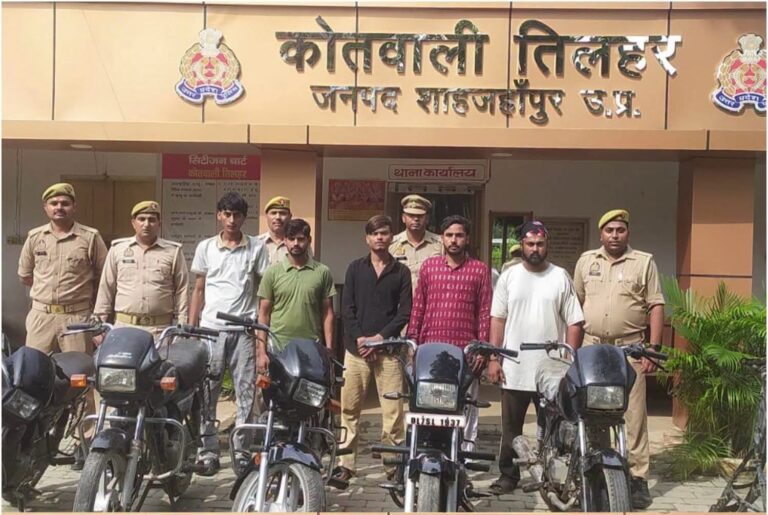
The most intriguing aspect of the story is the present-day establishment date displayed on the Kotwali building. Despite historical references pointing towards a much older policing system, the building currently carries 1989 as its establishment year.
This raises an important distinction: 1989 may refer to the construction or establishment of the present building rather than the origin of the police station itself.
Only an examination of official archival records can establish the exact historical timeline.
Until then, Tilhar Kotwali remains more than a police station—it is a living link between the colonial past and modern India, carrying a history that may stretch back nearly 169 years.
About The Author